When people plan to visit Iceland’s glaciers, their main concern might be glacier calving. That is, they want to know how safe they are when going on a glacier adventure, which is quite understandable.
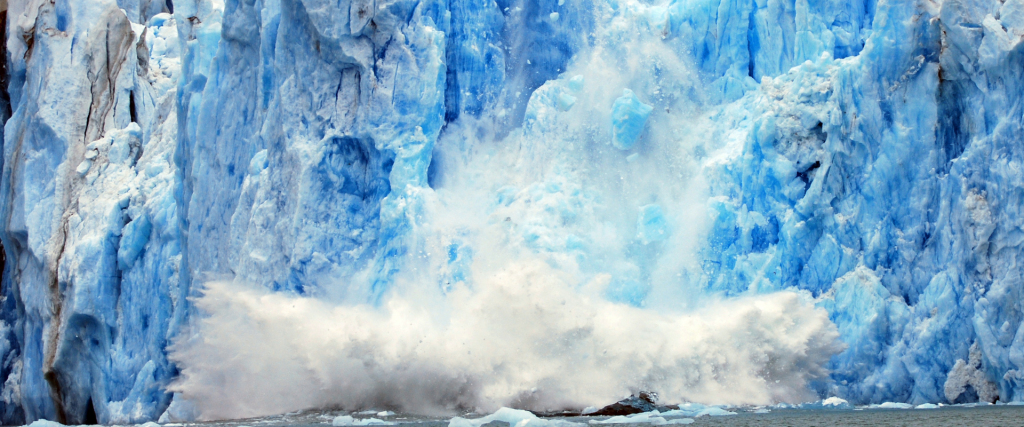
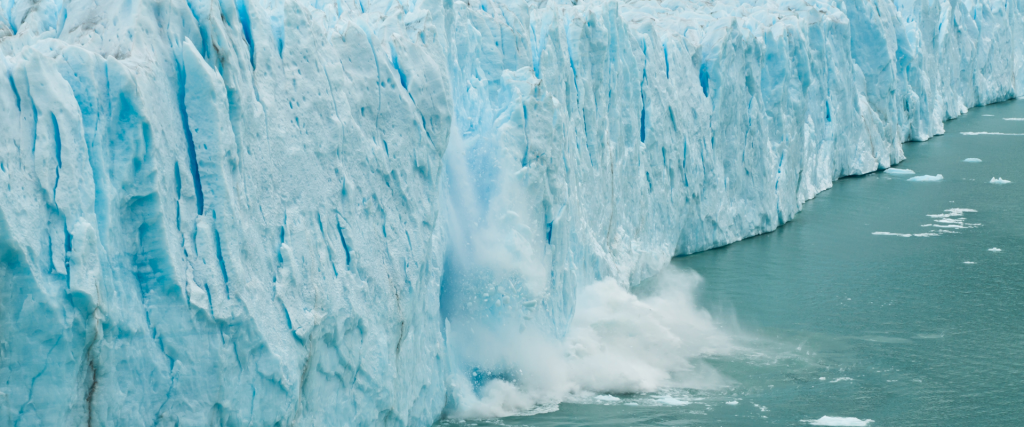
To get a clear image of glacier calving, imagine standing at the edge of a vast, glittering glacier, the air crisp and still. Suddenly, a deep, thunderous crack splits the silence, followed by the dramatic plunge of ice into icy waters below.
This is glacier calving, and it is one of nature’s most powerful and mesmerizing spectacles.
At Fjallsárlón glacier lagoon in Southeast Iceland, calving events are not only a highlight for visitors on our Zodiac boat tours, but also an important chapter in the ongoing story of our planet’s changing climate.
So, if you intend to travel to Iceland and you want to be well prepared, then you should know the basics of glacier calving.
Glacier calving is the process where a part of the glacier breaks off into the water. That chunk of ice turns into a floating iceberg in fresh or sea water.
What Happens When A Glacier Calves?
Before we get into the details, let’s cover what glacier calving is. This is the process where chunks of ice break off from the edge of a glacier and fall into a body of water, forming floating icebergs.
Ice calving usually happens with tidewater glaciers that end in the ocean or lake-terminating glaciers like Fjallsárlón and Jökulsárlón. As the glacier pushes forward, driven by its immense weight and gravity, stresses build up within the ice until it fractures – sometimes quietly, sometimes with a breathtaking display of force.
It is one of the most spectacular sights, which often creates astonishing stories for visitors.
Why Does Glacier Calving Happen?
Glaciers are in constant motion, slowly flowing downhill under their own weight. Over time, the front edge of a glacier extends over open water.
As stresses from the glacier’s forward movement build up, or as meltwater seeps into cracks and lubricates them, the ice can no longer hold together.
So, the result is a sudden break, sending icebergs tumbling into the lagoon.
However, there are also other factors that can influence calving, such as:
Rising temperatures: Warmer weather causes more melting and weakens the ice.
Water under the glacier: Meltwater can act as a lubricant, making it easier for ice to break off.
Ocean or lake water: The water itself can undercut the glacier, making chunks of ice more likely to calve away.
When a glacier calves and the ice falls into the water, it’s an incredible experience to witness. Not only visually but also the thundering sounds or the cracking ice.
The Beauty and Power of Calving
Witnessing glacier calving in Iceland is unforgettable. The sound alone – a deep rumble, like distant thunder or an explosion – can be heard across the lagoon. As the ice crashes into the water, it sends up spray and creates waves that ripple outward.
For photographers and nature lovers, it is a dreamlike subject that captures the raw, dynamic energy of Iceland’s landscape. That is why many adventurers simply adore Iceland and this phenomenon.
At Fjallsárlón, our Zodiac boat tours allow you to experience this up close, of course, at a safe distance.
The sight of newly formed icebergs, freshly released from the glacier’s face, is a reminder that these icy giants are always changing. Each calving event is a snapshot in the glacier’s ongoing journey from mountain to sea. And it is a story that you cannot find in any storybook.
Why Is Glacier Calving Important?
While glacier calving is a natural part of a glacier’s life cycle, it holds special significance as a signal of environmental change. Scientists closely monitor calving events to track glacier health and better understand how our climate is shifting.
Namely, glacier calving shows several things that are important for our planet:
Indicator of climate change: In recent decades, the rate and frequency of calving events have increased in many parts of the world. This is often linked to rising global temperatures, which accelerate glacial melt and lead to more frequent calving.
Impacts on sea level: When glaciers lose ice through calving, especially when it comes from land-based ice, it contributes to rising sea levels.
Freshwater supply: Glaciers are a critical source of freshwater for Iceland and many other places. Increased calving can affect the availability and timing of this vital resource.
Calving’s Hidden Dangers and Surprises
While ice calving is visually impressive, it can also be surprisingly loud and even dangerous.
The falling ice displaces large volumes of water, sometimes generating waves (even mini “tsunamis”) in glacier lagoons or fjords. The sound of an iceberg breaking can rival thunder, echoing for kilometers.
For this reason, it is important to experience glacier calving from a safe distance and always with trained guides. No matter how adventurous this sight may sound, it should never be done without professional knowledge.
At Fjallsárlón, our guides are experts in glacier safety and can explain the science behind what you are witnessing while ensuring a safe, responsible adventure.
Glaciers are not just a visually stunning natural phenomenons. They are also storytellers that keep stories and information from hundreds and even thousands of years back.
Glaciers: Not Just Ice, But Storytellers
As you can see from the process we explained above, glaciers are not static monuments – they are vibrant, dynamic entities that shape Iceland’s landscape and climate.
In addition to calving, they carve valleys, feed rivers, and regulate temperatures. So, each calving event is a chapter in the glacier’s story. In short, it is a record of change, challenge, and the urgent need for environmental stewardship.
Experience The Power of Glaciers at Fjallsárlón
Glacier calving is more than just an icy spectacle. It reminds us of nature’s dynamism.
So, there is nothing quite like witnessing glacier calving up close. It is an impressive process that will certainly create a core memory of your traveling adventures.
At Fjallsárlón, our guided tours let you safely observe this phenomenon, learn about glacier science, and experience the awe of Iceland’s ever-changing landscape. As local experts, we are passionate about sharing these moments and their deeper message about the importance of protecting our planet.
Ready to see it for yourself? Reach out to us to book your adventure and witness the story of the glaciers as it unfolds, one calving event at a time.
At Fjallsárlón, we are all about adventure, wild landscapes, and getting up close to Iceland’s raw nature. Our home turf is Southeast Iceland, and we have plenty of activities to offer, but we also believe everyone with extra time should explore Iceland to the fullest. So, for those with a week to spare, North Iceland… Continue reading Spend a Week in North Iceland Without Rushing
At Fjallsárlón, we know a thing or two about epic Icelandic adventures. While our home base is the breathtaking Fjallsárlón glacier lagoon in the southeast, we are also passionate about exploring every wild corner of this incredible country, including the untamed wonders of Northern Iceland.
As explorers and locals at Fjallsárlón, we spend our days surrounded by icebergs, glaciers, and the endless drama of Southeast Iceland’s wild landscapes. And, if there is one thing we see over and over, it is travelers zipping through the region on a rushed South Coast itinerary – snapping photos at Jökulsárlón and then dashing back to Reykjavík.




 Fjallsárlón

