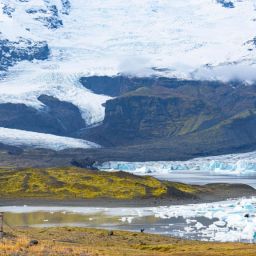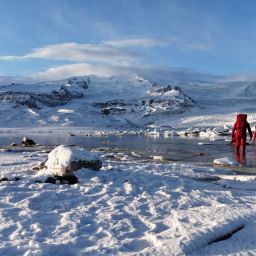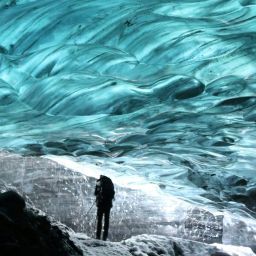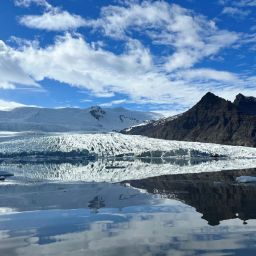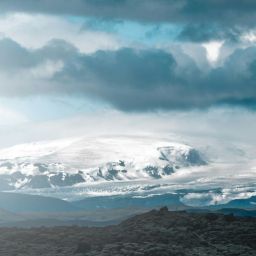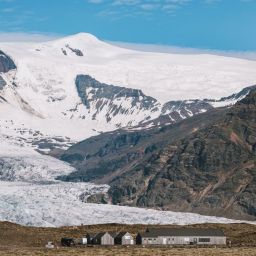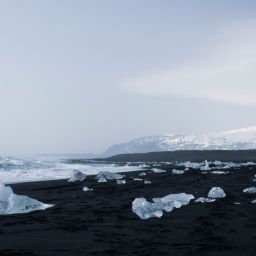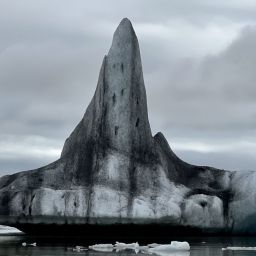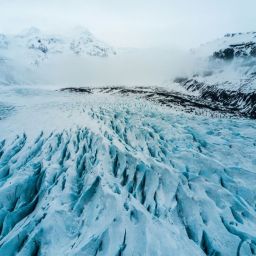

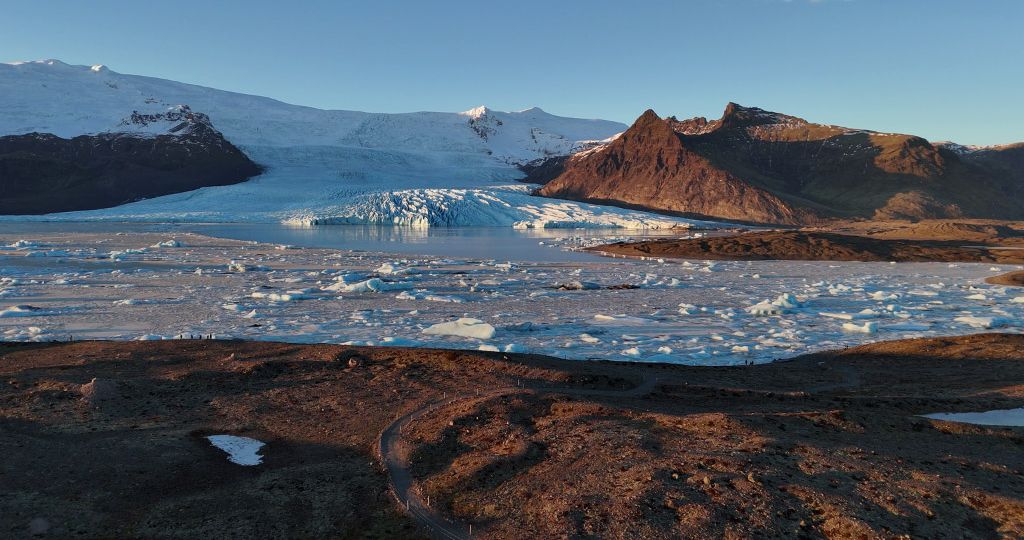
The clue to why environmental protection is so important to us here at Fjallsárlón is in our name. If you translate the different parts from the Icelandic roots, you get a word that’s comprised of three parts. The first, “fjall”, means mountain, a nod to the scenic backdrop behind the glacier. The next part, “á”, references the river of ice – the glacier – while the suffix “lón” means lagoon. Put it all together and you have the Lagoon of the Mountain River. It’s quite obvious, therefore, that nature is at the heart of Fjallsárlón and we’d be foolish not to take our role as custodians of this fragile landscape seriously.
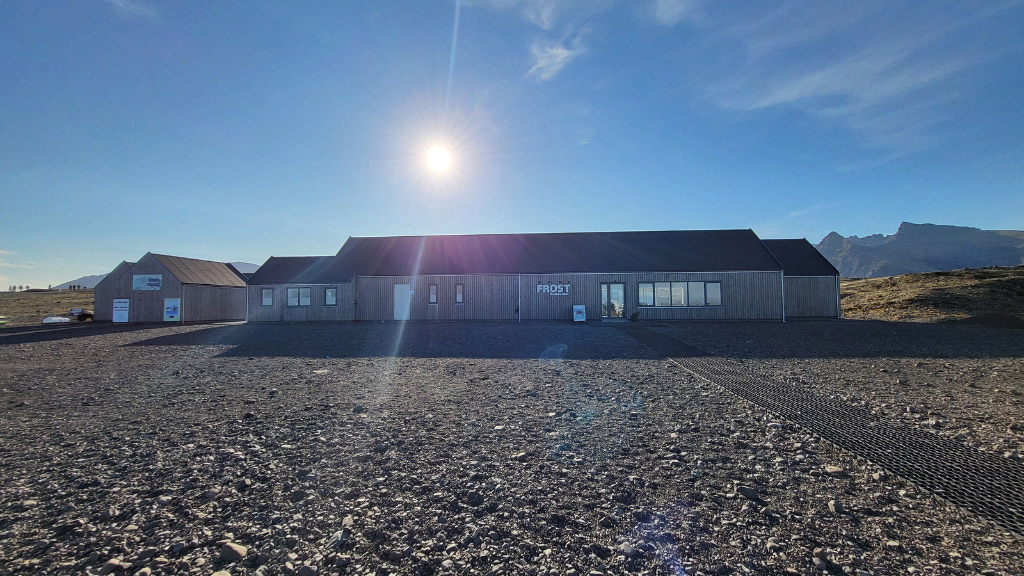
The buildings at Fjallsárlón Glacier lagoon were designed in a mindful way to the local environment and Icelandic culture.
Protecting Fjallsárlón started with what we added to the landscape
When it came to developing the Fjallsárlón site for tourism, it was crucial to ensure that what we built didn’t detract from the view that attracted us in the first place. The service centre we constructed needed to be a multi-purpose space that could double up as a reception for those embarking on our tours and also a restaurant to refuel hungry clients.
The use of natural materials that would weather and blend seamlessly into their setting – such as untreated larch wood cladding – was a major factor in minimising its environmental impact. The design we chose mimicked the traditional architecture of Iceland’s turf houses. Also, by tucking it close to the moraine we could ensure that the guest experience for those signed up to our boat tours wasn’t spoiled in any way.
Initially, before we developed the site, a gravel track led to the lagoon shore and it was heavily potholed. As we hoped to substantially increase visitor traffic, we needed to improve access. By upgrading the road surface, clearly defining parking spaces and putting in dedicated pedestrian paths we made sure that footfall was confined to certain areas and didn’t destroy vulnerable moss and vegetation.

During high summer in Iceland the sun never sets and it can be difficult for travellers to adjust to the constant daylight.
Being mindful of the kind of tourism activities we offer is equally important
There are many different models for attracting tourists to an area from mass market options to low-key routes that consider the long term impact of those who come. Being mindful of longevity and conservation are both critical in ensuring tourism doesn’t spoil the Fjallsárlón landscape.
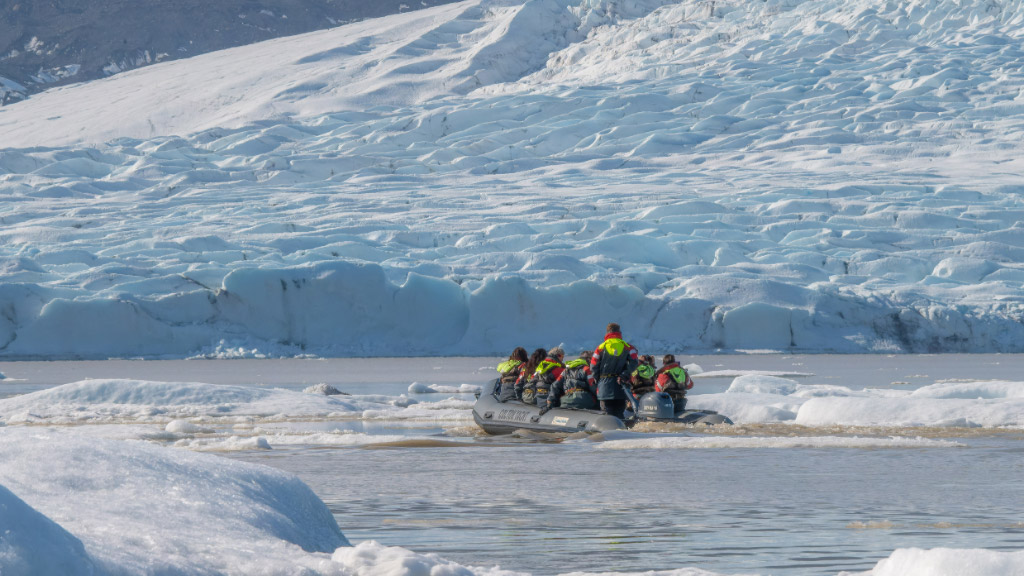
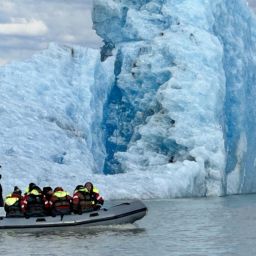
The zodiac iceberg boat tours are designed so that they have a minimal environmental impact.
For instance, we’ve tried hard to operate our Zodiac tours in a way that doesn’t pollute the glacier lagoon. We’re aware of the need to maintain a respectful distance from the area’s birds and avoid unnecessary disturbance; to this end we manage the use of drones at particular times of year. Minimising food waste and recycling where possible as well as a commitment to renewable energy is another example of what we do.
Education is also a key aspect of what we do. It’s not reasonable to expect visitors who’ve never been to Fjallsárlón to understand the pressures the area might face, so it’s up to us to make it clear what we expect of people. Explaining why we have specific policies and procedures in place makes it far more likely that travellers will follow our guidance. This message is echoed by our guides as they pass comment on the long term implications for Iceland’s glacial landscapes in the face of climate change projections.
In these ways, we hope to achieve a lasting balance between the demands of the visitors we welcome to Fjallsárlón and the need to ensure we don’t ruin the pristine environment that they’ve come to see. It can be tricky to keep those balls in the air at once, but the consequences of not doing so aren’t something we’d like to face.